
BJD, MJD, or Vinyl Doll?
"FS: MSD BJD Resin Light Tan"
Uhm, what?
When you roll into the wonderful world of ball-jointed dolls it's possible that the abbreviations and strange terms will come flying at you; OOAK French Resin BJDs, SD clothes that also fit SmD and face-up artists that also do small mods... Most of these terms are explained in the dictionary, but on this page we’re going to delve deeper into the question "Just what is the difference between a BJD, a MJD, and a Vinyl Doll?"

Who is what
Actually, it can be summed up pretty quickly;
- A BJD is a Ball-Jointed Doll i.e. a doll with balljoints that is held together with elastic.
- A MJD is a Mechanically-Jointed Doll with mechanical joints, whose parts are on an internat skeleton (or frame).
- A Vinyl Doll is a doll made of vinyl. The first versions of these were BJDs, but because they posed badly all later variants are MJDs. The term "MJD" is relatively new, and is often used at the same time as "Vinyl Doll" (also on this site!).
So the difference is mainly in the way the dolls body is held together, and not so much the material or the aesthetics.
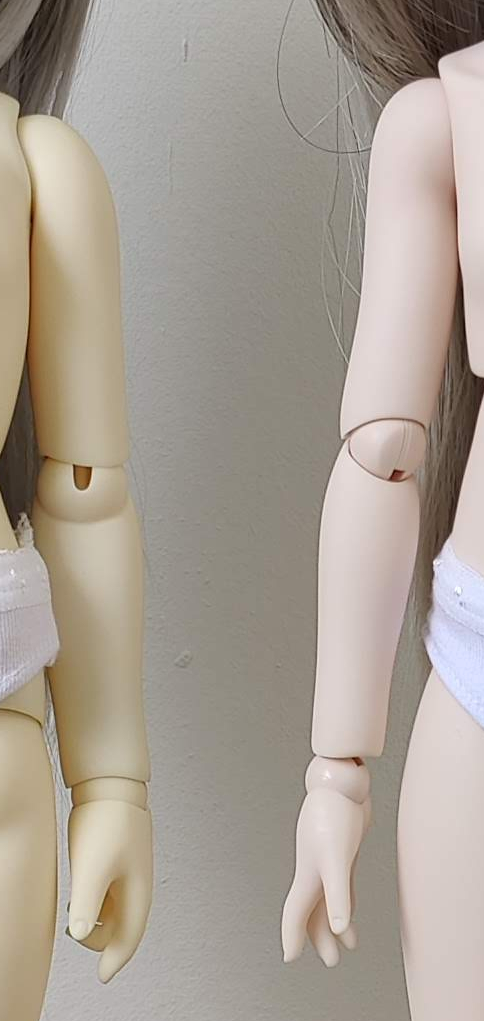
To illustrate, look back up at the two dolls (and their adorable outfits).
On the left in the photos is a resin BJD, and on the right a vinyl MJD. They are from the same company (Volks) and about the same height. But we are here for the differences!
As said; it’s in the constructions, elastic vs frame.
|
|
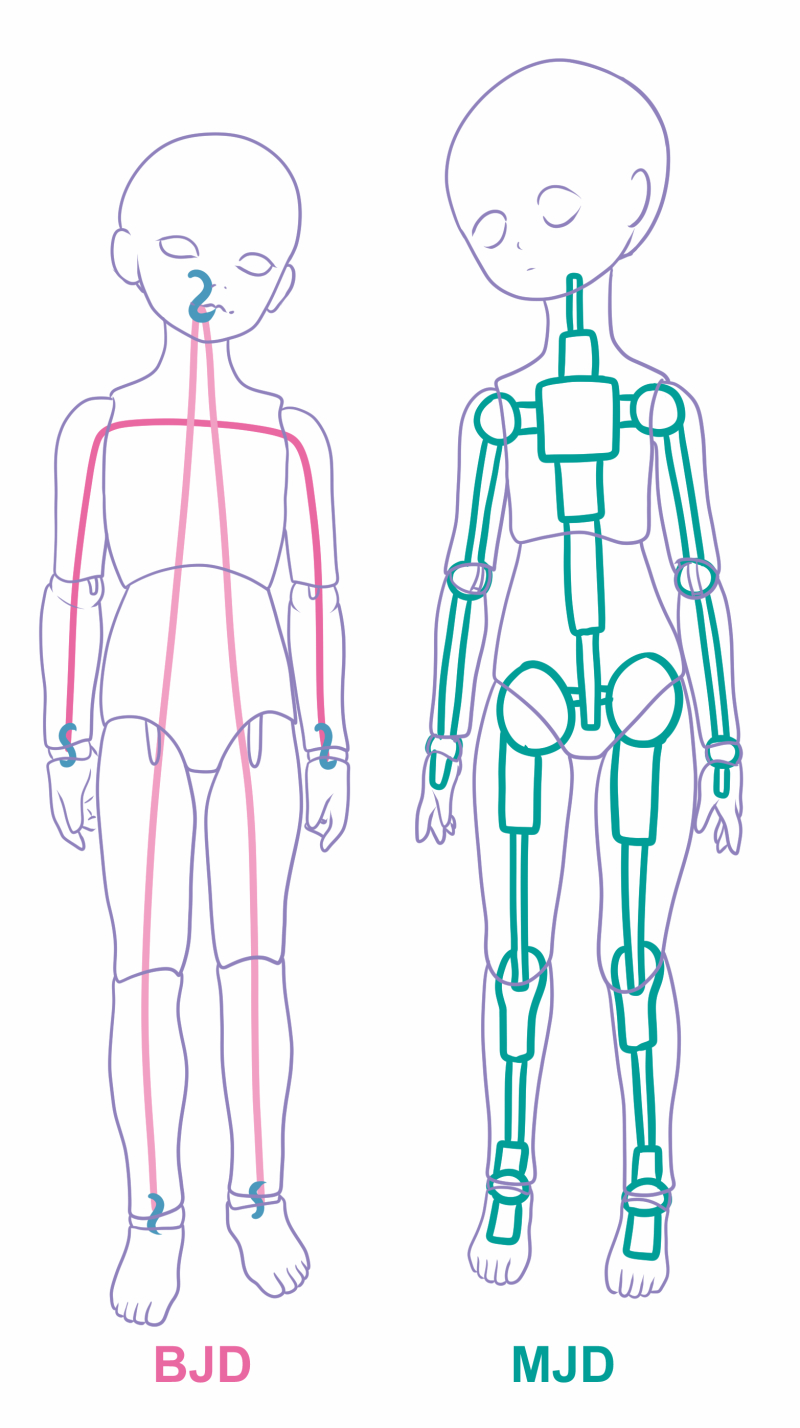
Inside of the BJD are two elastic loops; one that connects the arms to each other, and another that holds everything together from the feet to the head.
The MJD on the other hand has a skeleton that the parts of the body are put on piece by piece.
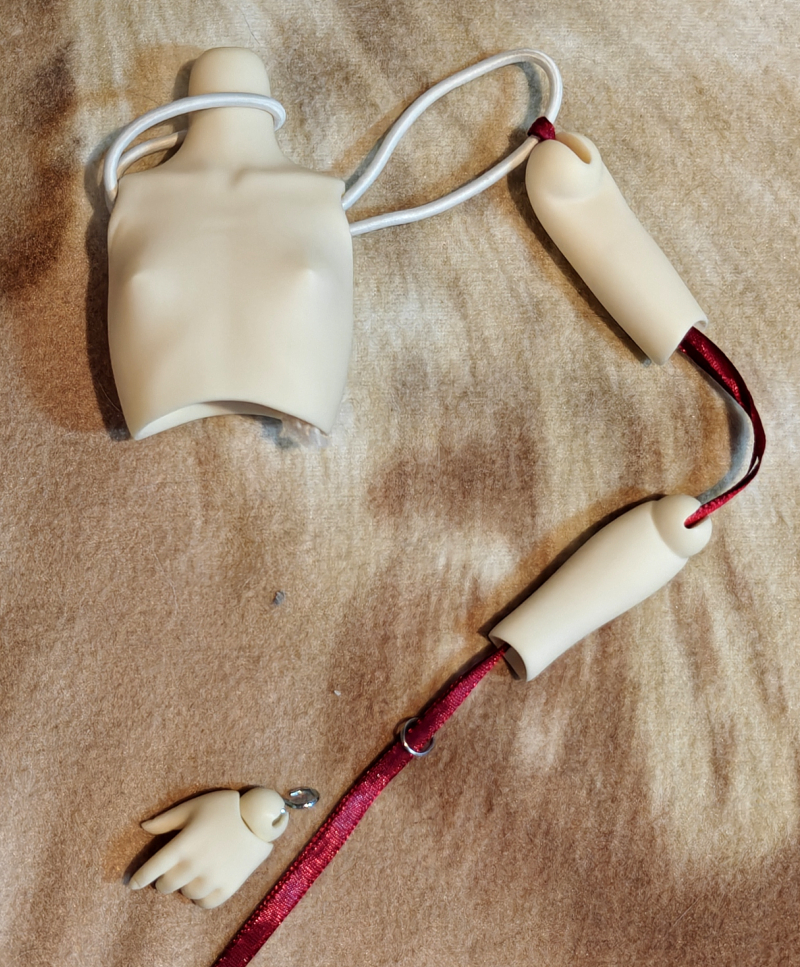
Restringing a BJD. The elastic loop goes through all the parts of the arm and the hands is attached with a s-hook. |
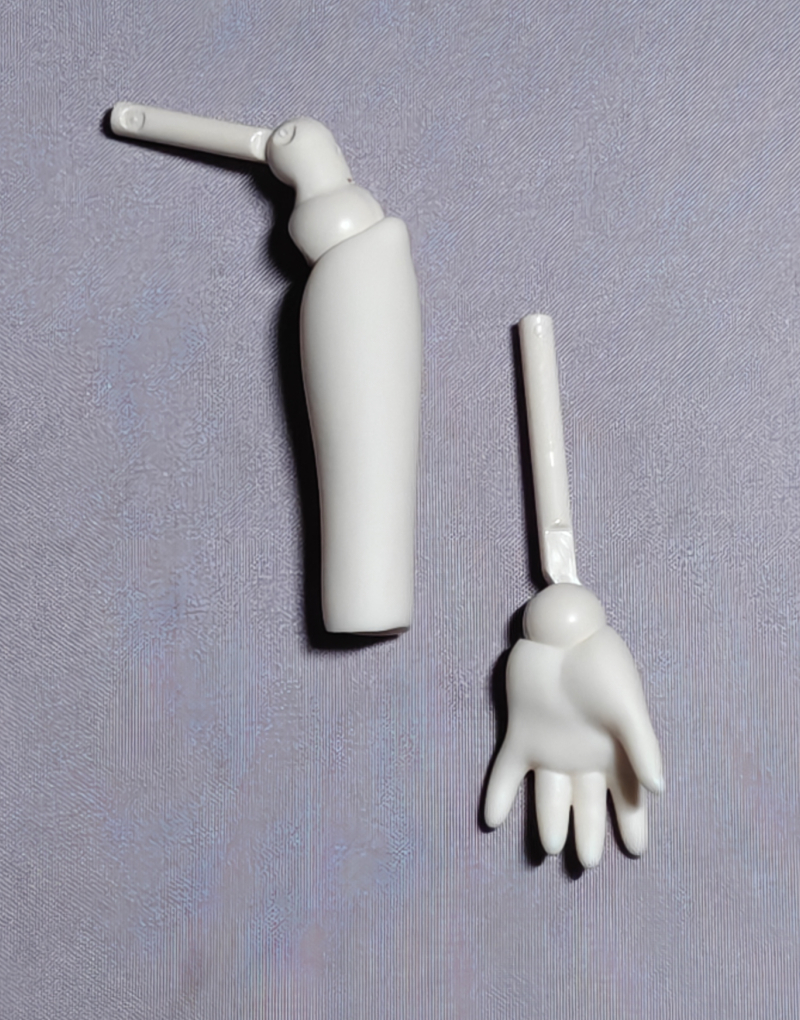
MJD parts are on top of a hard plastic frame that's made up of assembled loose parts. |
Why these two models? The MJD/Vinyl model was originally designed to appeal to a target audience outside of BJD fans, but there is a lot of overlap between the respective groups/. But, again, we are here for the differences!
Note:
When looking at individual artists' work, or starting your own, you will sooner or later run into 3D printed dolls. Resin and filament can both be used to print a BJD, with variety in strength/smoothness/colour depending on the material, the printer, the setting the maker used, and the level of treatment afterwards. Because of the high level of variations I've left these dolls out of this article, and limited the focus to "traditional" dolls.
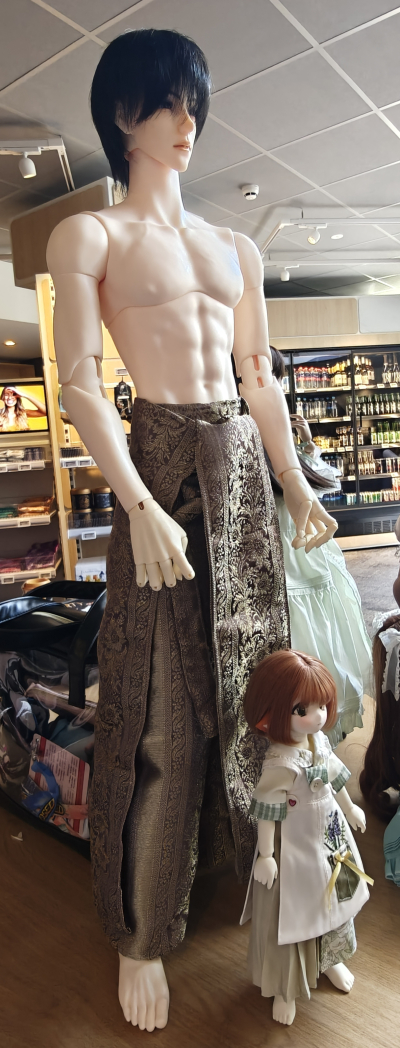
UFDoll 75(BJD) en TinyFox Little Fox(MJD); two PVC/ABS dolls. |
Production and material
Most BJDs are made by pouring polyurethane resin into a silicone mold. This is a relatively simple process, but the resin is expensive, and the molds have a limited lifespan and have to be remade often, which in turns drives up the price of the BJD.
MJDs on the other hand are usually made out of vinyl, which requires metal molds and specialist knowledge. This sounds more expensive, but the molds last much longer, and the vinyl itself is cheap, which means the average MJD is cheaper than a similar BJD.
A new player in al of this is PVC/ABS, a cheap, light, and strong type of plastic that is currently mainly being used by Chinese makers for both BJD and MJD production. The production proces is probably similar to that of vinyl, but the result is harder and therefore not limited to the support of an internal frame.
Weight and posing
BJDs are under constant tension from the elastic that holds them together, and so it’s important that the body parts are thick enough to handle it. Resin (and thus money) can be saved by hollowing out the pieces as much as possible, but especially the more expensive brands will not take any risk with this, which leads to the use of more material and thus a heavier doll. Depending on the size and maker a BJD can weigh several kilos.
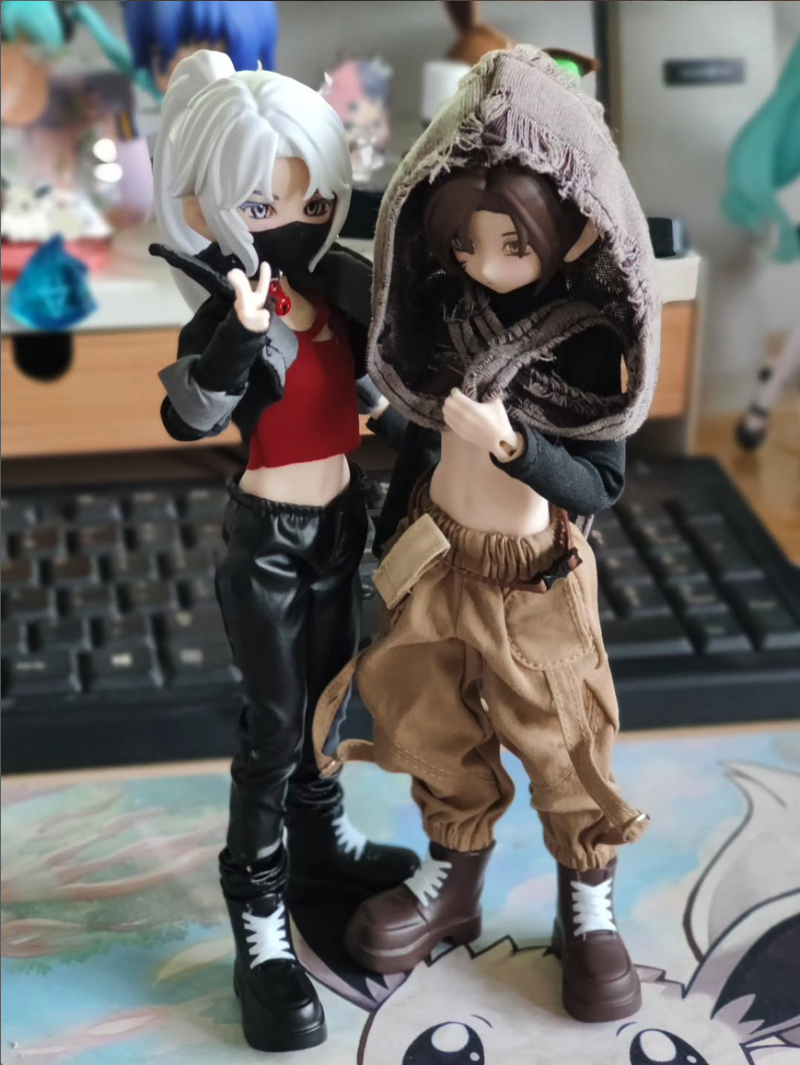
Zack Event Bounty Hunter & Scavenger (PVC/ABS BJD)
A posing-abilities of a BJD depends first of all on the complexity of the joints, but because the parts are not attached to each other there's a lot more possible, especially when the joints are hidden beneath clothing. Joints can be over-bent, and then secured underneath something, or hold that position with the aid of wiring.
That said; the whole thing is still under tension, and especially tightly strung dolls can go and move on their own! To counteract this a doll can be lightly modded with sueding or wiring..
MJDs have an internal frame, and that limits the reach of their joints; over-bending a joint will lead to damage. But the poses they can handle will be held so long as the internal frame is in good shape.
By the way, there's a little wiggle room here as well; some fans have developed their own joints that offer more possibilities and are selling these online.
Variation
Variation is where BJDs have a big advantage; the relatively simple production proces of resin dolls means that experimenting doesn’t bring a lot of risk, and production numbers can easily be adjusted to popularity. This makes it relatively easy to offer things like horns, wings, or unusual limbs.
In addition polyurethane is made in (relatively) small batches, so adding colour pigment for a couple (or even just one) doll is easily done.
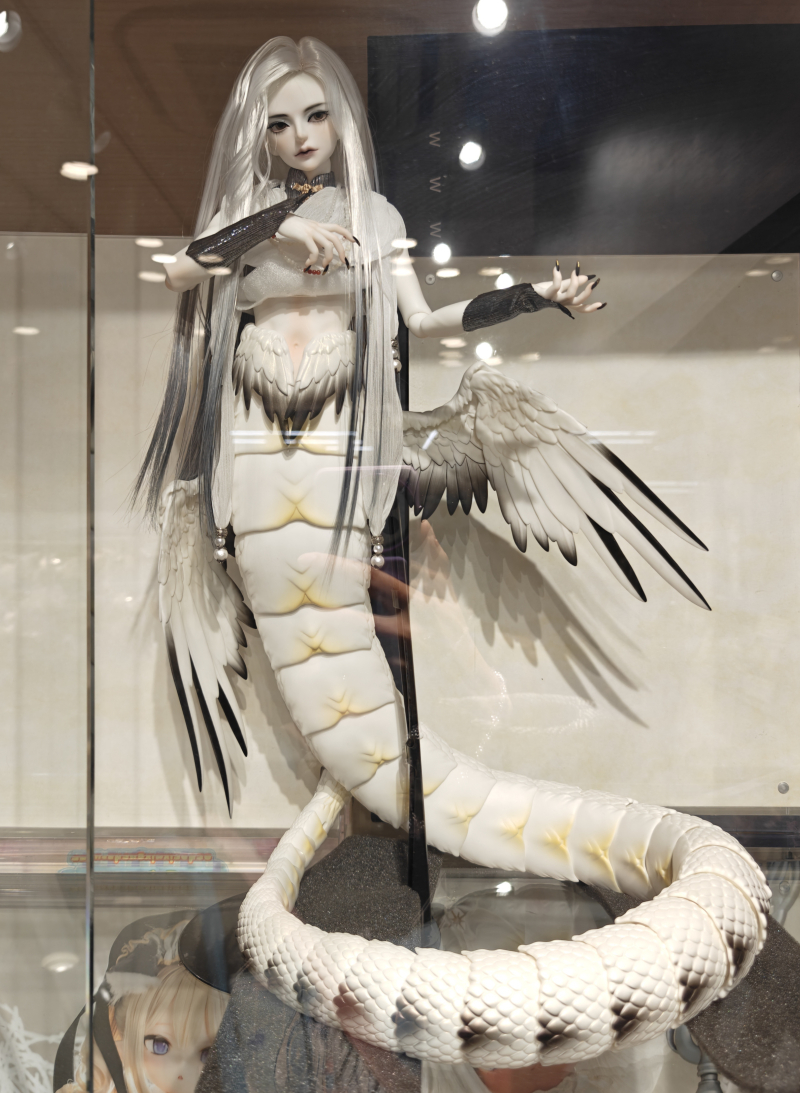
Dream Valley Ehecatl |
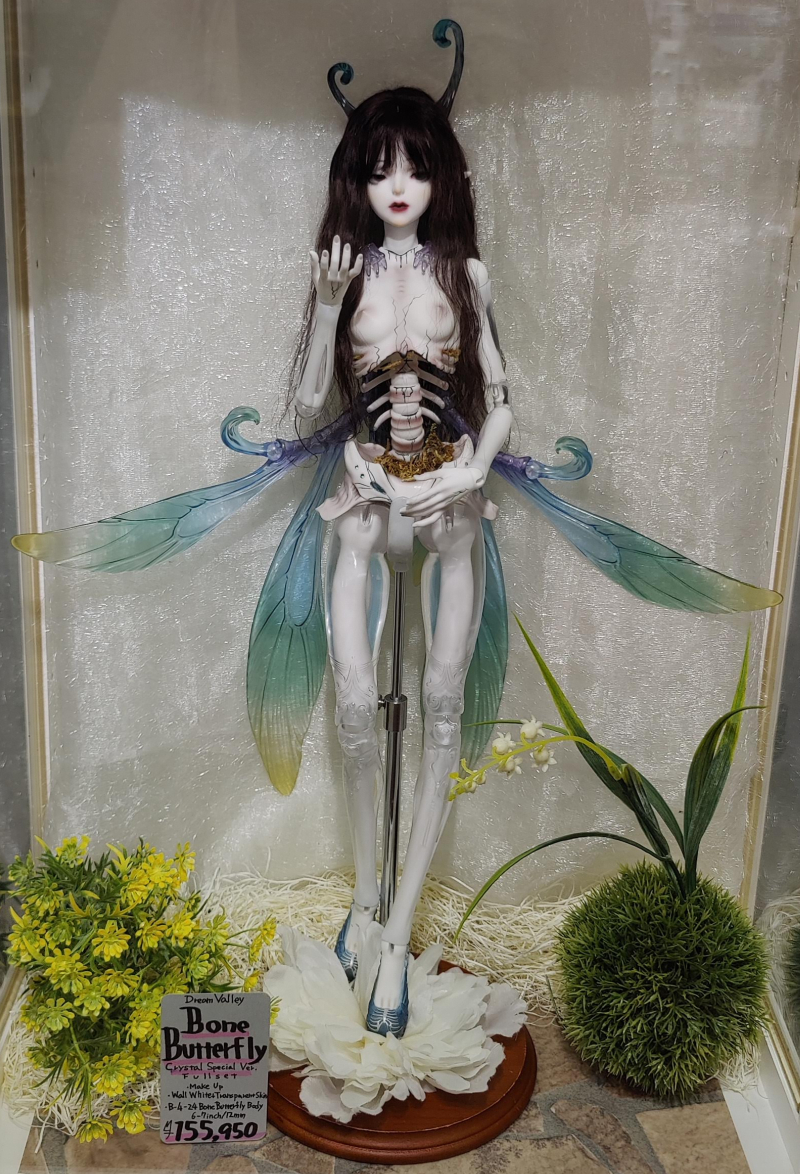
Dream Valley Bone Butterfly |

PiposDoll Charlotte (resin BJD)
As mentioned before, the molds for vinyl production are expensive, so each new mold has to be guaranteed to earn itself back. Additionally vinyl production seems to work with larger numbers, which gives less opportunity to work with unusual colours. Even a company like Smartdoll, which is know for their colour options opposed to other vinyl doll makers, only has a few basic colours in stock. “Fantasy” colours appear rarely, and only in limited numbers.
Lifetime
Where BJDs are concerned; polyurethane is known to yellow over time. The amount of yellowing is influenced by a number of things; the colour of the resin, the presence of UV-blocking materials, and the amount of UV light that the doll is exposed to. Newer dolls seem to be more resistant to sunlight, but most if not all dolls will change colour sooner or later.
Aside from this the resin is slightly porous, and dyed articles such as clothes and accessories can stain if they are left in direct contact with the doll over a period of time. In some cases both yellowing and stains can be lessened or removed using chemicals or even with light sanding, but it’s beter to prevent it from happening in the first place. Give the doll light-coloured underwear or a bodysuit, and avoid direct sunlight.
Note: So far I haven’t heard anything about stains or yellowing on PVC/ABS dolls.
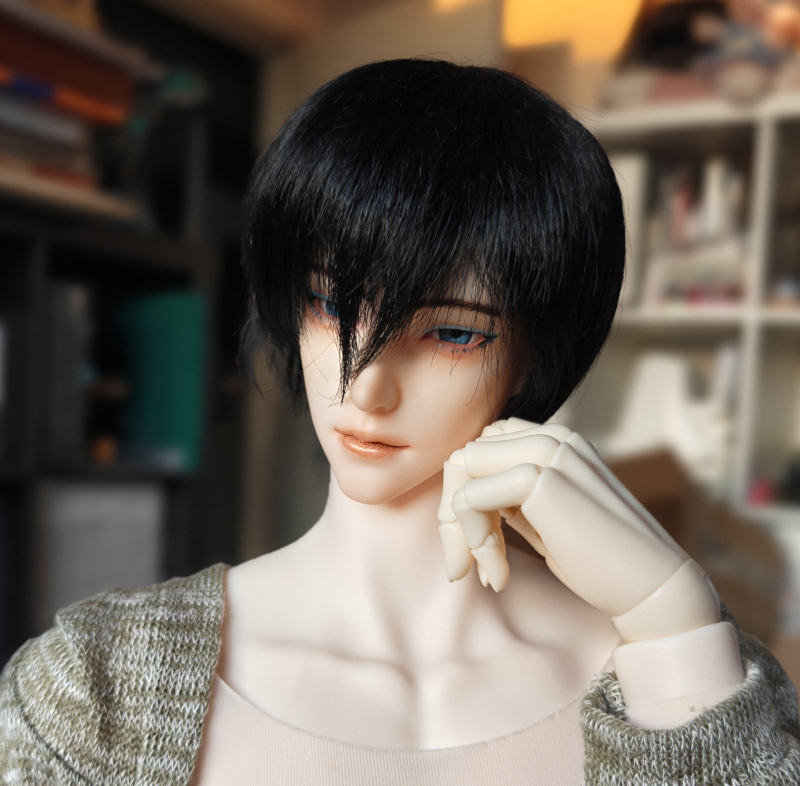
UFDoll 75 with Jointed Hands (PVC/ABS BJD)
For BJDs there’s also the matter of the elastic that holds everything together losing its strength over time, which causes the doll to become floppy. Shortening the elastic, or restringing the entire doll are part of basic maintenance.
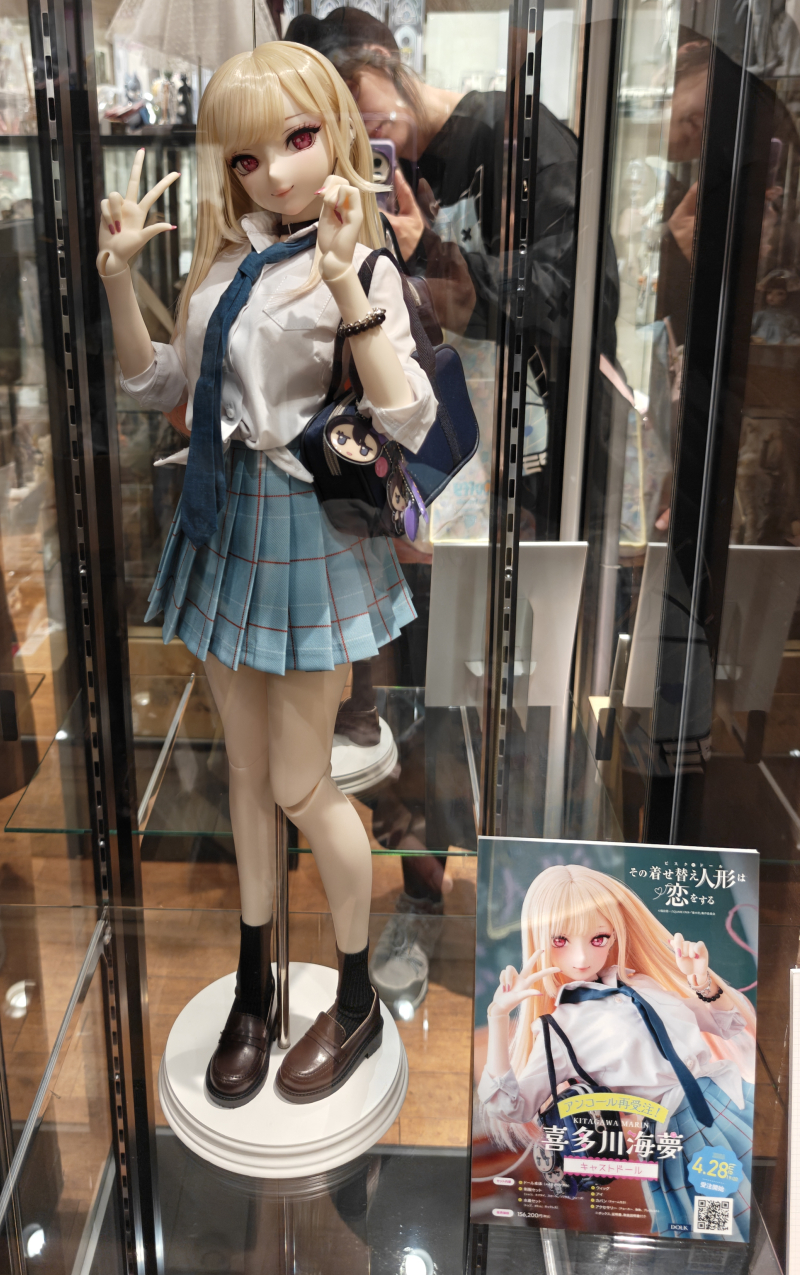
DOLK Marin (resin BJD)
MJD vinyl also yellows, but much less drastically and over a much longer period of time; the change in colour is only noticeable on very old dolls.
Sadly this material is pretty porous, and vinyl dolls will get stains due to clothes or accessories a lot faster compared to resin dolls. Light-coloured underwear and/or a bodysuit are strongly recommended!
The frame of these dolls can loosen over time, or in extreme cases even break, which causes the limbs to be unable to hold a pose. Wether these problems can be easily fixed or require replacement parts depends on the nature of the problem, the specifications of the doll, and what the maker has on offer; replacement parts for a newer Dollfie Dream or Azone doll can be bought from the company itself, but for a Smartdoll you will be dependant on the secondhand market and your own skills.
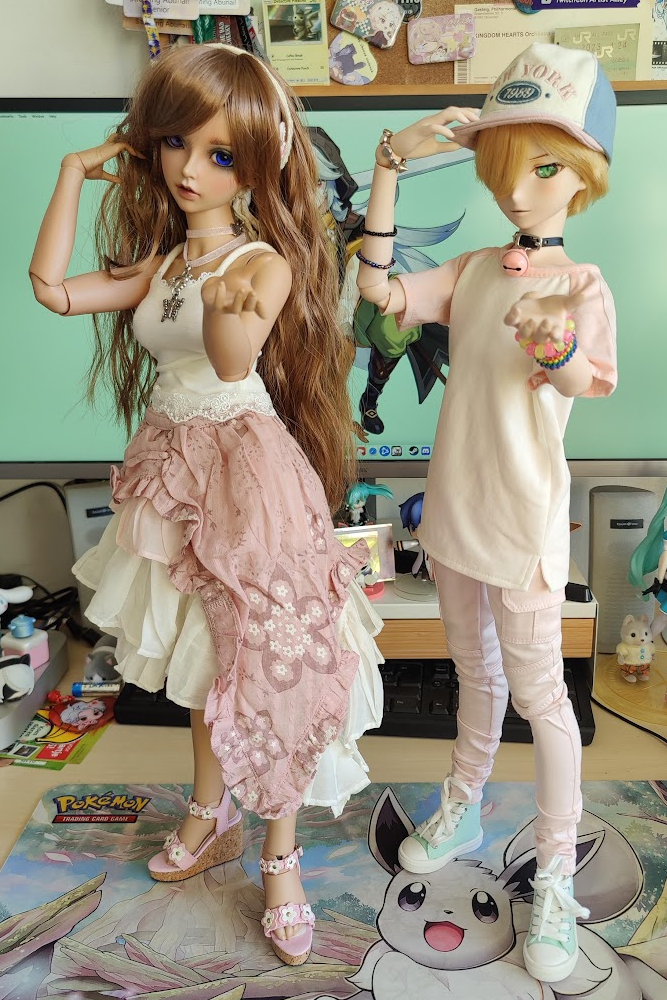
FairyLand Celine (Resin BJD) en Dollfie Dream Sister BoyDC-H 26 (vinyl MJD)
Written by Isabel